Looking at the modern children, one striking difference between the childhood that the previous generation had and the one that this generation is having is the lack of Indian or native games. In our generation (i.e., 1980s and before) we used to play a variety of indoor and outdoor games that were the games of this soil. Nowadays almost all kids play games like cricket, tennis and football. Nobody is playing games like Kabaddi, Goli, Ghilli or the indoor games like the Dhaayakattam , paramapadham, pallanguzhi, paandi or aadu puli aattam. These games have a rich culture and heritage value and were tools of passing on some ancestral knowledge or the other. They also sharpened our observational and math skills unlike the hit and run games of the west that are uni-dimensional and strengthen only hand eye coordination. We would like to see our hubbers come out with details of their favorite native games and how they enjoyed it.
Traditional Games were not just games, they were designed in such a way that one can develop lot of skills like logical thinking, building strategy, concentration, basic mathematics, aiming, and lot more. Nowadays we develop these skills by paying money to centers that conduct personal development courses.
Traditional Games act as learning aids. They teach us many things while playing like to learn to win and lose, develop sensory skills, count, add, improve motor skills, identify color, improve hand-eye co-ordination and finally to have fun, naturally one play or watch a game to have fun.
The values that we achieve by playing these games are more when compared to the games that we play nowadays. Some of the values that we gain are that they are environment friendly, we get a chance to learn about our culture and history, and an important thing is, it is suitable for all ages, so they increase the interaction between generations. Many modern games played around the world have their origin in these traditional games this is a pride to our country's culture.
Thursday, August 22, 2013

The Sherwani
-a coat like garment, worn by men, fitted close to the body, of knee-length or longer and opening in front with button-fastenings. Below the men wear a garment for the lower part of the body, baggy and wide at the top tied with a string at the waist , and tight around the legs and ankles. It is avery elegant dress for the men and mostly worn during ceremonies. Sherwani is the formal attire, usually wore by North Indian Royalties. Began during the Mogul times, embroidery work traditionally done by craftsman from Banaras & Delhi. Now, the embroidery work is made through machine. This dress in popularly known as jodhpuri in Rajistan, long back Indian men would wear a sherwani for all formal occasions including going for work or to their offices ,but as for today it is only made for special occasions like weddings or festivals.

The Lungi
- The traditional lungi originated in the south and today it is worn by men and. It is simply a short length of material worn around the thighs rather like a sarong.

The Dhoti
-The most ancient recorded Indian drape (excluding the Harrapa civilisation) is a dhoti. Although Buddha is shown wearing a large mantle, his lay followers, such as Ashoka and the men and women represented on the stupa of Bharhut, wore elaborately pleated dhotis. Nowadays, dhotis are still worn by men all over India. They require a piece of cloth which seems longer and larger than what was worn in the past, but their pleating is often simpler, and they are not adorned with belts anymore.
All dhotis begin with the same basic closing. It is the only drape that doesn't start from one pallav (end of the sari), but from the centre of the upper border. The middle of the cloth is tied around the hips. Each end of the cloth is then draped around the leg on its side.

The Kurta-Pyjama
-The Kurta or the top is a knee length colarless shirt which is adorned inmostly white or pastel colors. But today you will find Kurtas made out of the most wonderful and colorful of fabrics. Pyjama-are like loose trousers with a string tie at the waist. Traditionally white in color.

Turbans
-You must have seen Sikh and Rajasthani men in turban well this turban means a lot to them. Turbans for men hold religious significance. Infact in Hindu weddings wearing head turbans for men is a kind of custom where the girl's as well as boy's father are found bedecking their heads with a turban more commonly known as 'Pugree'. It has become an integral part of wedding ceremonies. It's interesting to see Indian men draping their turbans.

-a coat like garment, worn by men, fitted close to the body, of knee-length or longer and opening in front with button-fastenings. Below the men wear a garment for the lower part of the body, baggy and wide at the top tied with a string at the waist , and tight around the legs and ankles. It is avery elegant dress for the men and mostly worn during ceremonies. Sherwani is the formal attire, usually wore by North Indian Royalties. Began during the Mogul times, embroidery work traditionally done by craftsman from Banaras & Delhi. Now, the embroidery work is made through machine. This dress in popularly known as jodhpuri in Rajistan, long back Indian men would wear a sherwani for all formal occasions including going for work or to their offices ,but as for today it is only made for special occasions like weddings or festivals.
The Lungi
- The traditional lungi originated in the south and today it is worn by men and. It is simply a short length of material worn around the thighs rather like a sarong.
The Dhoti
-The most ancient recorded Indian drape (excluding the Harrapa civilisation) is a dhoti. Although Buddha is shown wearing a large mantle, his lay followers, such as Ashoka and the men and women represented on the stupa of Bharhut, wore elaborately pleated dhotis. Nowadays, dhotis are still worn by men all over India. They require a piece of cloth which seems longer and larger than what was worn in the past, but their pleating is often simpler, and they are not adorned with belts anymore.
All dhotis begin with the same basic closing. It is the only drape that doesn't start from one pallav (end of the sari), but from the centre of the upper border. The middle of the cloth is tied around the hips. Each end of the cloth is then draped around the leg on its side.
The Kurta-Pyjama
-The Kurta or the top is a knee length colarless shirt which is adorned inmostly white or pastel colors. But today you will find Kurtas made out of the most wonderful and colorful of fabrics. Pyjama-are like loose trousers with a string tie at the waist. Traditionally white in color.
Turbans
-You must have seen Sikh and Rajasthani men in turban well this turban means a lot to them. Turbans for men hold religious significance. Infact in Hindu weddings wearing head turbans for men is a kind of custom where the girl's as well as boy's father are found bedecking their heads with a turban more commonly known as 'Pugree'. It has become an integral part of wedding ceremonies. It's interesting to see Indian men draping their turbans.
Tuesday, August 20, 2013
The Sari
-The sari is the traditional garment of an Indian woman. It is an unstitched piece of cloth, which varies from five to nine yards in length and can be worn in different styles. A sari is worn over a petticoat and a short-sleeved midriff-baring blouse. The most popular style of wearing a sari is by tucking one end into the petticoat at the waist while a major portion of it is pleated neatly and tucked in the front. The rest of the sari, which is known as the pallu or pallav is taken over the left shoulder. The pallu is the most fascinating and striking feature of a sari, it is often heavily embellished with woven motifs or embroidery.
However, this authentic Indian garment has lost some of its popularity as daily wear in the recent past. The western outfits have made an inroad into the Indian woman’s wardrobe due to a shift towards rapid globalization and emerging corporate culture. Today, women prefer to wear clothes that offer ease of movement in addition to style. Also, with the boom in the retail industry Indians have a wider variety of options to pick and choose from and women are being increasingly seen in designer outfits western style outfits.

Gujarati
-The Gujarati woman sports a distinctive style, as she wears a sari with a neatly pleated pallu brought in front over the right shoulder with one end tucked around the waist to the left.
Mysore Silk
-Mysore Silk: Mysore silk saris of Karnataka are famous for their traditional designs and colours. The zari work on the pallus and borders add to the sophistication and elegance of these saris. Mysore silk saris are considered to be very durable and can be washed and worn as often as required.

Ghangra/Lengha Choli
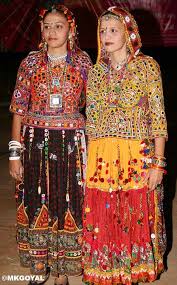
A ghagra or a lehenga is a long gathered gypsy skirt with dazzling embroidery or mirror work and comes in vibrant colours. It is worn with a choli, which is a short closely fitted woman’s blouse that shows off the midriff, or a kurti (shorter version of a kurta). Some cholis can be fastened at the back by means of narrow strips of cloth or chords. An odhni or a dupatta (scarf) with intricate designs complements the outfit. Women in Rajasthan and Gujarat don this beautiful and highly sensuous outfit. Dressier versions are teamed with chunky silver jewellery during festivals and other important occasions.

Maharashtrian
A nine-yard sari called the nawwadi is the traditional style very similar to the men’s dhoti. The pleats of the sari are placed between the legs and tucked in the centre back. Fisherwomen in the coastal regions of Maharashtra still wear a nawwadi and well, it is worn without a petticoat!

-The sari is the traditional garment of an Indian woman. It is an unstitched piece of cloth, which varies from five to nine yards in length and can be worn in different styles. A sari is worn over a petticoat and a short-sleeved midriff-baring blouse. The most popular style of wearing a sari is by tucking one end into the petticoat at the waist while a major portion of it is pleated neatly and tucked in the front. The rest of the sari, which is known as the pallu or pallav is taken over the left shoulder. The pallu is the most fascinating and striking feature of a sari, it is often heavily embellished with woven motifs or embroidery.
However, this authentic Indian garment has lost some of its popularity as daily wear in the recent past. The western outfits have made an inroad into the Indian woman’s wardrobe due to a shift towards rapid globalization and emerging corporate culture. Today, women prefer to wear clothes that offer ease of movement in addition to style. Also, with the boom in the retail industry Indians have a wider variety of options to pick and choose from and women are being increasingly seen in designer outfits western style outfits.
Gujarati
-The Gujarati woman sports a distinctive style, as she wears a sari with a neatly pleated pallu brought in front over the right shoulder with one end tucked around the waist to the left.
Mysore Silk
-Mysore Silk: Mysore silk saris of Karnataka are famous for their traditional designs and colours. The zari work on the pallus and borders add to the sophistication and elegance of these saris. Mysore silk saris are considered to be very durable and can be washed and worn as often as required.
Ghangra/Lengha Choli
A ghagra or a lehenga is a long gathered gypsy skirt with dazzling embroidery or mirror work and comes in vibrant colours. It is worn with a choli, which is a short closely fitted woman’s blouse that shows off the midriff, or a kurti (shorter version of a kurta). Some cholis can be fastened at the back by means of narrow strips of cloth or chords. An odhni or a dupatta (scarf) with intricate designs complements the outfit. Women in Rajasthan and Gujarat don this beautiful and highly sensuous outfit. Dressier versions are teamed with chunky silver jewellery during festivals and other important occasions.
Maharashtrian
A nine-yard sari called the nawwadi is the traditional style very similar to the men’s dhoti. The pleats of the sari are placed between the legs and tucked in the centre back. Fisherwomen in the coastal regions of Maharashtra still wear a nawwadi and well, it is worn without a petticoat!
Indian Traditional Clothing
Clothing in India varies from region to region depending on the ethnicity, geography, climate and cultural traditions of the people of that region. Historically, men and women's clothing has evolved from simple Langotas and loincloths to cover the body to elaborate costumes not only used in daily wear but also on festive occasions as well as rituals and dance performances. In urban areas, western clothing is common and uniformly worn by people of all strata. India also has a great diversity in terms of weaves, fibres, colours and material of clothing. Colour codes are followed in clothing based on the religion and ritual concerned. For instance, Hindu ladies wear white clothes to indicate mourning, while Parsis and Christians wear white to weddings
Indian Traditional Wedding
A wedding is the ceremony in which two people are united in marriage. Wedding traditions and customs vary greatly between cultures, ethnic groups, religions, countries, and social classes. Most wedding ceremonies involve an exchange of wedding vows by the couple, presentation of a gift (offering, ring(s), symbolic item, flowers, money), and a public proclamation of marriage by an authority figure or leader. Special wedding garments are often worn, and the ceremony is sometimes followed by a wedding reception. Music, poetry, prayers or readings from religious texts or literature are also commonly incorporated into the ceremony.
Shagun ceremony
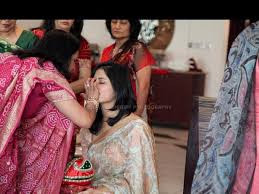
Shagun-ceremony Traditionally the shagun ceremony holds an important place in the pre-wedding rituals. Once the girl and the boy have consented to the marriage, the elders in the families chose an auspicious date for the shagun ceremony. This date may be calculated with help of astral calendar often known as Panchanga. On the day of the Shagun, groom’s mother visits the bride’s house with gifts, clothes, betel nut, rice and incense. Jewelry and sweets are also added to the Shagun. Acceptance of the shagun by the bride signifies her formal consent to be the daughter in law of the family.
Engagment
Mangni or Sagaai refers to the engagement ceremony where the girl and boy exchange rings in the presence of the elders and friends. Sagaai is a grand affair just like the wedding ceremony. It is accompanied by fun, dance and music. Lavish feast is designed for Sagaai. Sagaai ceremony marks the mutual agreement and consent for marriage by both the families.
Mangni Ceremony is known as wedding engagement or wedding nishwayam in south india.

Mehndi Ceremony
This is one of the most awaited wedding rituals. Mehndi ceremony is organized by the women of the house. Female guests are invited to participate in the Mehndi function that is marked with music and dance. Mother of the bride applies a small dot of Mehndi on bride’s small finger. An expert Mehndi artist then draws intricate Mehndi designs containing auspicious symbols on bride’s hands and feet. Other women may also indulge in applying simple Arabic Mehndi designs on their hands. Modern day brides may opt for simple Arabic Mehndi designs on the back of the hand and traditional Indian designs on the palm. Mehndi is often organized in evenings and guests are offered sumptuous dinner. Mother of the bride may also ask the Mehndi artist to write the groom’s name amidst the Mehndi design. The groom has to find the name in post wedding rituals.

Sangeet Ceremony
Sangeet ceremony is held in the house of the bride and the groom separately. Sangeet ceremony consists of music, dance and fun. Bride’s friends revel in teasing the bride about her future husband. Elders of the house sing traditional songs and bless the bride. Sangeet ceremony also involves pampering the bride as she is nearing the last stage of her single life. Some communities may have different ceremonies within the Sangeet ceremony itself. Churi ceremony may be held with the Sangeet function. In this ceremony, all the women are presented with different bangles of their choice.

Haldi Ceremony
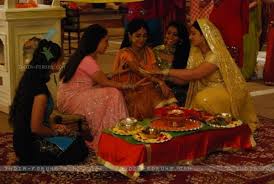
- Haldi ceremony is conducted a day prior to the wedding. Freshly ground turmeric mixed with fragrant extracts of jasmine and sandalwood is applied on the bride and the groom’s body. Turmeric holds a special place in Hindu culture. It is considered auspicious. It is believed that Haldi ceremony imparts a natural glow to the bride and the groom. Raw turmeric stick (halkund) is tied to a yellow thread and is tied around the bride’s hand. Bride and the groom are not supposed to leave their houses until the day of the wedding.
Wedding Day
-
Indian Wedding Reception
-Reception is held either on the same day or on the next day of the marriage. The couple is seated on a stage, where all the relatives and friends wish them a happy married life and present them with gifts.


Shagun ceremony
Shagun-ceremony Traditionally the shagun ceremony holds an important place in the pre-wedding rituals. Once the girl and the boy have consented to the marriage, the elders in the families chose an auspicious date for the shagun ceremony. This date may be calculated with help of astral calendar often known as Panchanga. On the day of the Shagun, groom’s mother visits the bride’s house with gifts, clothes, betel nut, rice and incense. Jewelry and sweets are also added to the Shagun. Acceptance of the shagun by the bride signifies her formal consent to be the daughter in law of the family.
Engagment
Mangni or Sagaai refers to the engagement ceremony where the girl and boy exchange rings in the presence of the elders and friends. Sagaai is a grand affair just like the wedding ceremony. It is accompanied by fun, dance and music. Lavish feast is designed for Sagaai. Sagaai ceremony marks the mutual agreement and consent for marriage by both the families.
Mangni Ceremony is known as wedding engagement or wedding nishwayam in south india.
Mehndi Ceremony
This is one of the most awaited wedding rituals. Mehndi ceremony is organized by the women of the house. Female guests are invited to participate in the Mehndi function that is marked with music and dance. Mother of the bride applies a small dot of Mehndi on bride’s small finger. An expert Mehndi artist then draws intricate Mehndi designs containing auspicious symbols on bride’s hands and feet. Other women may also indulge in applying simple Arabic Mehndi designs on their hands. Modern day brides may opt for simple Arabic Mehndi designs on the back of the hand and traditional Indian designs on the palm. Mehndi is often organized in evenings and guests are offered sumptuous dinner. Mother of the bride may also ask the Mehndi artist to write the groom’s name amidst the Mehndi design. The groom has to find the name in post wedding rituals.
Sangeet Ceremony
Sangeet ceremony is held in the house of the bride and the groom separately. Sangeet ceremony consists of music, dance and fun. Bride’s friends revel in teasing the bride about her future husband. Elders of the house sing traditional songs and bless the bride. Sangeet ceremony also involves pampering the bride as she is nearing the last stage of her single life. Some communities may have different ceremonies within the Sangeet ceremony itself. Churi ceremony may be held with the Sangeet function. In this ceremony, all the women are presented with different bangles of their choice.
Haldi Ceremony
- Haldi ceremony is conducted a day prior to the wedding. Freshly ground turmeric mixed with fragrant extracts of jasmine and sandalwood is applied on the bride and the groom’s body. Turmeric holds a special place in Hindu culture. It is considered auspicious. It is believed that Haldi ceremony imparts a natural glow to the bride and the groom. Raw turmeric stick (halkund) is tied to a yellow thread and is tied around the bride’s hand. Bride and the groom are not supposed to leave their houses until the day of the wedding.
Wedding Day
-
Indian Wedding Reception
-Reception is held either on the same day or on the next day of the marriage. The couple is seated on a stage, where all the relatives and friends wish them a happy married life and present them with gifts.
Subscribe to:
Posts (Atom)